The grill isn’t the weak point in winter. The pellets are. Wood pellets are just pressed hardwood with no fillers, so moisture makes them swell and crumble, and crumbly pellets can clog the auger and keep the grill from lighting at all. That’s straight from Traeger, and it’s why most of this list is about getting pellets out of the grill and keeping them dry.
The metal side is tougher than people think. Traeger’s support page says its grills use parts rated for temperatures from -30°F to -50°F. So whether yours is heading to the garage or staying out for winter cooks, these 10 steps come from Traeger’s own care guides, with a note wherever Pit Boss does it differently. They work on just about any pellet grill.
Putting a griddle away too? Here’s how to winterize a Blackstone griddle.
1. Empty the Hopper
Traeger is fine with pellets sitting in the hopper for a short stretch of dry weather. Once long rain or high humidity is on the way, it says to take them out and store them airtight. For a grill going into storage, emptying it is the first step.
How you do it depends on the grill. Newer Timberline and Ironwood models have a pellet slide under the hopper, so you just set a bucket underneath and pull it. Others have a cleanout door on the back of the hopper. If yours has neither, remove the pellet guard and scoop them out. Turn the grill off before your hands go in, and don’t tip the grill to dump it.

Then get the dust. Use a shop vac on the bottom of the hopper and the auger tube to pull out the last pellets and the sawdust. Traeger’s cleaning schedule has you do this monthly anyway, and sawdust is one of the things it lists behind slow starts.
Pit Boss does it differently. Pit Boss says to empty the hopper after every cook, not just for storage. Leftover pellets exposed to the outdoors can rot, and it says emptying them helps prevent auger jams. Most Pit Boss grills have a hopper cleanout for this.
2. Check the Pellets Before You Save Them
There’s no point storing pellets that are already gone. Good ones have a sheen and break with a clean snap. Traeger’s signs of a bad batch are pellets that look dull, crumble when you try to snap them, sawdust spread all through the bag or clumped up, and any moisture in the bag. A little sawdust at the bottom is normal.
Bad pellets cause more trouble than a slow start. Traeger calls poor pellet quality the number one cause of temperature issues, and it can show up as temperature swings mid-cook. If a new bag looks compromised, Traeger suggests taking it back to the retailer or contacting its support (it only vouches for its own pellets). And there’s no set shelf life. Traeger says it all comes down to how well they’re stored.
3. Store Them Dry and Airtight
This is the big one. Traeger’s rule is dry and airtight. In a dry climate, unopened bags can live in the garage. In a humid one, moisture can get into even unopened bags out there, so put them in a large airtight bin or bring them inside. Traeger’s support team goes further and strongly suggests indoor storage for anyone in a humid climate.
Opened bags need the most care. Traeger’s StayDry bin holds 22 pounds, enough for a full 20-pound bag, with a locking airtight lid, and it’s shaped to sit under the hopper on newer grills so you can empty straight into it. It’s also the first pick on our list of Traeger grill accessories.
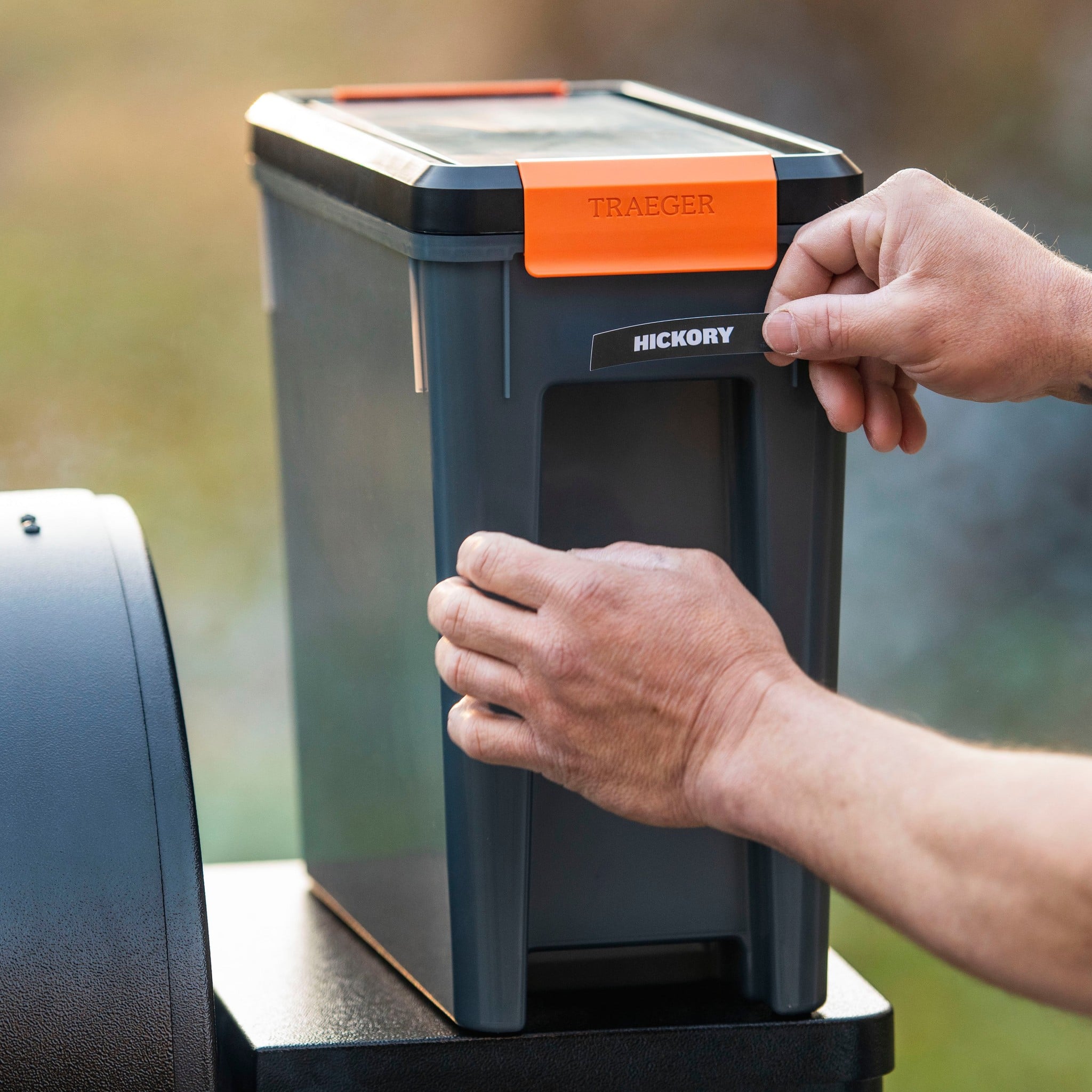
Pit Boss adds two good rules. Don’t keep pellets in the original bag, even indoors; a 5-gallon bucket with a sealable lid works. And keep them away from heat. Pit Boss calls pellets extremely flammable and says a garage spot near the cars or the water heater is a bad idea, sealed bag or not.
4. Clean the Ash Out of the Firepot
Ash in the firepot makes it harder for the grill to light, and Traeger lists ash buildup among the causes of a slow ignition. Before storage, clean it out. The grill has to be completely cold, ashes included. Traeger says a dedicated vacuum is the best tool but warns to use it with extreme care because of the fire risk. Check under the firepot and the bottom of the hopper while you’re in there.
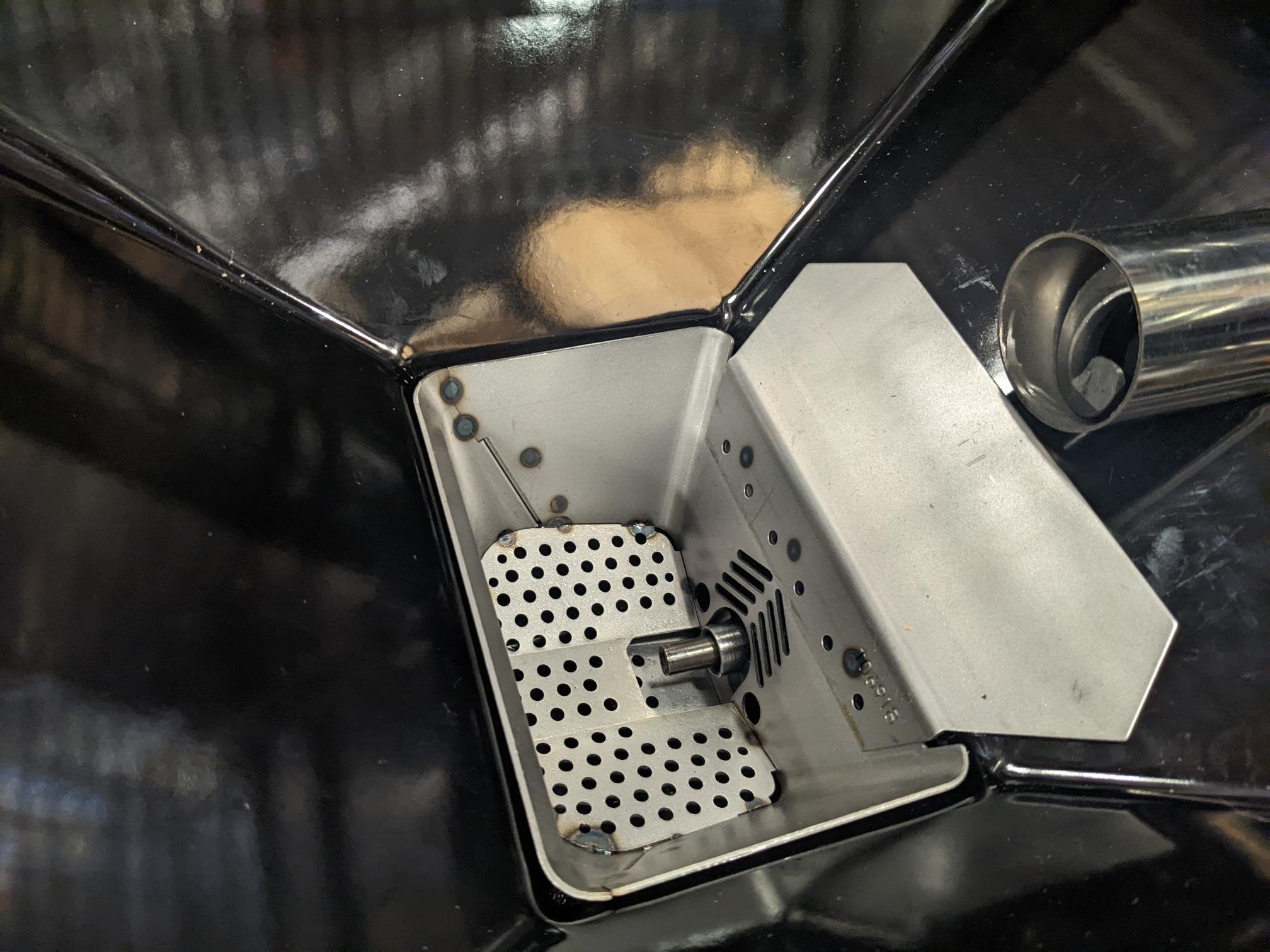
If you lift the firepot out, set it back so the lip sits flush with the grill and isn’t caught on the auger tube.
Pit Boss is specific about the vacuum. Use a wet/dry shop vac or an ash vacuum, never your regular household vacuum. Fine ash isn’t what it’s built for, and Pit Boss says its hoses and filters can even start a fire.
5. Deal With the Grease
Grease left sitting all winter is a mess in spring and a fire risk on the first cook. Traeger says most grill fires come from improper maintenance. With the grill off and cool:
- Drip tray. Pour off the grease, wash it with warm soapy water, rinse, and let it dry completely before it goes back in, so it doesn’t rust. Put in a fresh liner, or wrap foil tightly around the edges. Traeger warns that loose, fanned-out foil can mess with airflow.
- Grease chute. Pull the grates and drip tray, find the metal channel underneath, and scrape it with a nylon brush, then wipe with paper towels. Traeger’s schedule calls for this every 6 months.
- Bucket or keg. Toss the liner, or scrape the bucket clean once it’s cold. On Timberline and Ironwood touchscreen grills, that means the Grease Governor cap, the Grease Tube, and the Grease & Ash Keg. Woodridge grills use a keg liner you just swap.
- Chimney. On Pro Series grills, loosen the cap, check for grease or soot, and clean the inside and the cap.
6. Deep Clean, Then Oil the Grates
Traeger’s deep clean is the right send-off. Unplug the grill first. Spray the grates (and the chimney, if you have one) with an all-natural degreaser, pull out the grates, drip tray, and heat baffle, vacuum the inside and firepot, and wipe the inside and outside down after the cleaner soaks a few minutes. Skip wire brushes. Traeger says the bristles can break off into food and can damage the grate coating and cause warranty issues. Leave the temperature probe (the thermocouple or RTD) alone unless there’s visible buildup on it.
Rust needs moisture, so don’t let any stay behind. Traeger says to wipe the grates dry before closing the lid, then rub on a little vegetable or canola oil to keep air and moisture off the metal. That matters most where the coating is chipped. For the outside, a soft cloth and a non-abrasive cleaner do it, and Traeger says car wax helps preserve the finish.
On timing, Traeger calls for a deep clean every 2 to 3 cooks (about 20 to 24 hours of cooking). Pit Boss says every 15 to 20 hours.
7. Shut It Down Right and Unplug It
Let the last cook end with a full shutdown cycle. On Traeger’s newer grills that runs about 15 to 25 minutes, with the fan still going, and Traeger says not to flip the power off or pull the plug before it finishes. Cutting it short risks backburn, flare-ups when you open the lid, and grill fires.

Once it’s done and cool, unplug it. Traeger wants the power cord disconnected before any maintenance, and a grill headed for storage powered off. A few notes on the electronics:
- WiFIRE grills. In normal use, Traeger has these sit in sleep mode so they can download firmware. If yours is unplugged all winter, plug it in and connect it before the first spring cook so updates come through.
- Condensation on the screen. Traeger says give it time to evaporate. If it’s trapped inside the controller and won’t clear, contact Traeger support.
- Touchscreen power button. Snow followed by rain can let moisture in and keep the power button from engaging. Traeger has a support article for that one.
- Extension cords. Use a GFCI outlet and an outdoor-rated cord, at least 14 gauge, with a ground pin, and never a damaged or frayed one.
Pit Boss adds a step Traeger doesn’t. It has you run a burnoff after every cook to clear the auger. Set it to 350°F with the lid closed for 5 to 10 minutes (another 10 to 20 after greasy cooks), drop it to 200°F for five minutes, then turn it to OFF and let the automatic cool-down finish. Shop vac the ash from the burn plate afterward.
8. Cover It
Traeger calls a cover the best protection against the elements, and a waterproof one keeps off snow and rain. Wait until the grill is cool before covering it, never cover it while it’s running, and don’t store the cover inside or under the grill. When the cover itself needs cleaning, wipe it with warm soapy water. No washing machine, no bleach.
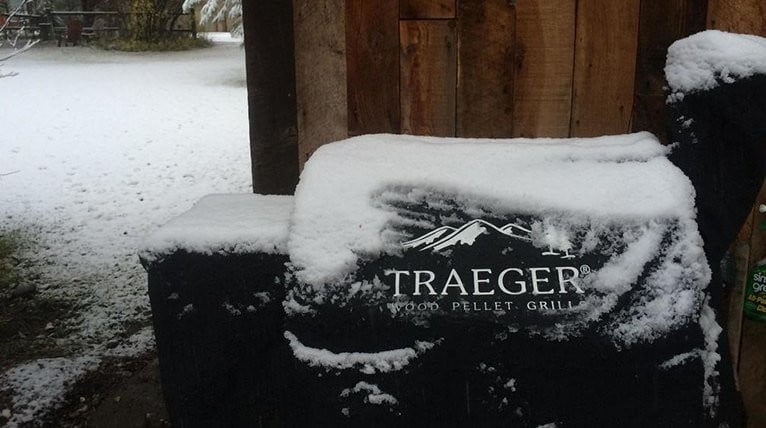
Check on it after a big storm. Traeger suggests shoveling a path and brushing snow and ice off the cover before it gets too heavy. And if you find condensation on the grill, wipe it off. Traeger says moisture can get trapped between cover and grill in wet weather. On Timberline and Ironwood touchscreen grills, some water in the barrel or the grease keg after an uncovered rain is normal; towel it out or use a wet vac.
Pit Boss points out one more job for the cover. It keeps snow, sleet, and curious critters out of the hopper.
9. Pick Where It Spends the Winter
A shed or garage is fine for storage if the grill is powered off, completely cool, and empty of pellets and fuel, so nothing combustible sits in your building. Traeger also notes that a garage isn’t automatically dry. If things in there collect condensation, the inside of your grill will too, and it suggests running a dehumidifier in humid weather.
Staying outside? Pick a spot out of harsh wind if you can, and make sure snow won’t slide onto it from a steep roof or an overhead branch. Never cook in a garage, and don’t park a running grill close to a wall or overhang. Traeger calls that a fire hazard.
10. Planning to Cook All Winter? Know the Blanket Rules
A pellet grill can keep going through winter, it just works harder. Traeger says to expect slower lighting, a grill that may run a bit cooler than the set temperature, and more pellets burned to hold heat. Cook to internal temperature rather than time, keep the grill clean, and keep the pellets fresh and dry.
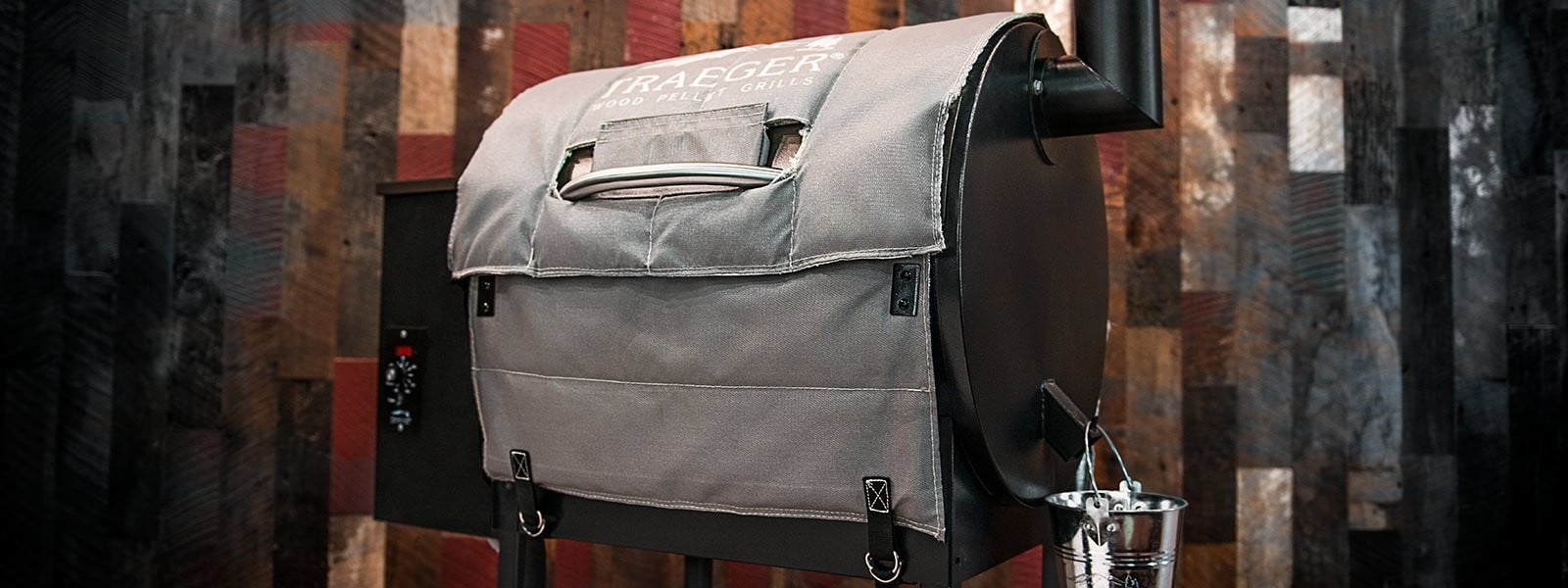
An insulation blanket helps, with rules attached. Traeger’s support page says to use one only when it’s below 32°F outside and the grill is set to 350°F or lower. Above freezing or above 350°F, it warns of damage to the grill and the blanket and, in some cases, fire. Blankets fit specific models only, including the Pro 575, Pro 780, Pro 22, and Pro 34 (Traeger says some higher-end models are insulated enough not to need one). Don’t use one with a folding front shelf installed, and take it off when the cold season ends. They aren’t meant for year-round use.
Pit Boss has a preheat shortcut for cold days. Set the grill hotter than you plan to cook, around 350°F, then turn it down once it gets there. Our tips for grilling in cold weather cover the cooking side.
When It’s Time to Fire It Back Up
After a winter in storage, give it a look before the first cook.
- Check for mold. Traeger says moisture and leftover food can grow mold over winter. Look over the grates, firepot, and inside walls, and clean it if you find any.
- Test the pellets. Shine and snap, same as item 2. Dull or crumbly ones go.
- Prime the auger. An empty auger needs filling before the first fire. On D2 WiFIRE grills it’s Menu, then Auger, then Prime Auger. On touchscreen grills it’s under Maintenance & Care. On dial controllers, set it to High until pellets start dropping into the firepot (usually 2 to 5 minutes), then turn the dial to Shutdown Cycle. Pull the grates, drip tray, and heat baffle first so you can watch the firepot.
- Put everything back right. Traeger’s pre-cook checklist has the drip tray and heat baffle properly installed, a clean tray or fresh liner, and the hopper full.
- Light it with the lid closed. Traeger says to ignite and preheat with the lid closed and no food on the grates.

Sources
All read 2026-11-11 on the makers’ own sites.
- Traeger, How to store wood pellets
- Traeger, Tips for winter grilling
- Traeger, All about insulation blankets
- Traeger, How to clean a Traeger grill
- Traeger, How to clean a Traeger grease trap and more
- Traeger, How to prevent rust on grill grates
- Traeger, Grill temperature swings
- Traeger support, Cleaning your Traeger pellet grill
- Traeger support, How to remove and replace pellets
- Traeger support, Traeger pellets
- Traeger support, Traeger pellet storage bins
- Traeger support, Weather effects on grilling
- Traeger support, Insulation blankets
- Traeger support, Grill covers
- Traeger support, Condensation on grill
- Traeger support, Water collecting in grill or grease keg
- Traeger support, Rust on Traeger grills
- Traeger support, Alert: slow ignition
- Traeger support, How to shut down your Traeger pellet grill
- Traeger support, How to start your Traeger pellet grill
- Traeger support, How to prime an auger
- Traeger support, Power cords
- Pit Boss, Winter grilling tips
- Pit Boss, The do’s and don’ts of proper wood pellet storage
- Pit Boss, Cleaning your wood pellet grill 101