To winterize a Blackstone griddle, clean the top, dry it, and wipe on a thin coat of oil. Then turn everything off, disconnect the propane, cover it, and keep it somewhere cool and dry. Check it for rust about once a month until spring. That’s the whole job, and every step below comes from Blackstone’s own care guides and owner’s manuals.
The seasoning is what you’re protecting. It’s the baked-on layer of oil that keeps food from sticking and keeps water off the steel. Three things ruin it over a winter: moisture that turns into rust, harsh cleaners that strip it, and oil laid on so thick it goes gummy.
Planning to keep cooking through the cold instead? Our tips for grilling in cold weather cover that side.
1. Clean the Top While It’s Still Warm
Start with a last cook, or just heat the griddle for a few minutes. Blackstone’s routine is simple. Scrape off any food and grease, pour a little water on the warm top, and keep the burners on low to medium while you push the water around with the scraper. The water lifts the gunk as it steams off. Repeat until the steel is clean, then wipe it dry.
For stuck-on spots, Blackstone suggests its scouring pad, used gently. Skip abrasive scrubbers on a seasoned top (Blackstone saves those for rust), and skip detergents and oven cleaners entirely. Blackstone says they’ll ruin the seasoning layer and can even cause corrosion.

Don’t forget the grease cup. Blackstone’s cleanup checklist has you empty and clean it, and grease left sitting all winter is the last thing you want to find in March. Its manuals add one rule before anything gets moved or stored: let the griddle cool to 115°F first.
Our 8 tips for keeping a Blackstone working great go deeper on the everyday clean.
2. Wipe On a Thin Coat of Oil
This is the step that protects the seasoning all winter. Once the top is clean and completely dry, add about a tablespoon of oil and spread it with paper towels held in tongs. Blackstone’s word is “thinnest.” Wipe up any drips or puddles, then let it cool.
Thin matters more than it sounds. Blackstone warns that a thick coat leads to chipping and a sticky buildup on the plate. You want a sheen, not a slick. If you live somewhere humid or near the coast, the manuals say your griddle may need seasoning more often between uses.

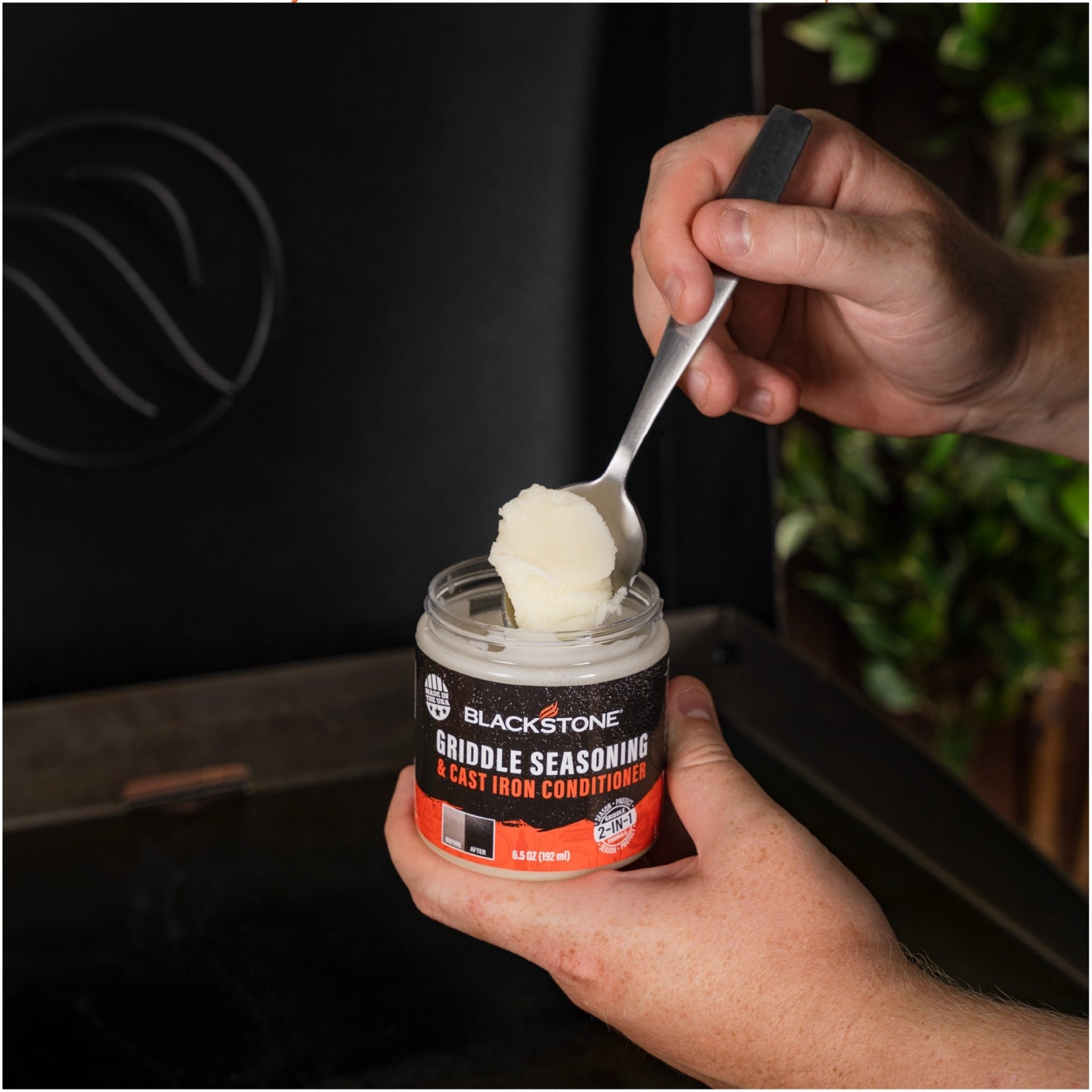
Any plant-based cooking oil works, according to the manuals. Blackstone’s own pick is its Griddle Seasoning & Cast Iron Conditioner, a blend of coconut oil, soy shortening and beeswax that it says protects against sticking and rust between uses.
Seasoning a griddle from bare steel is a longer job with several rounds of oil and heat. If yours needs that, our guide to Blackstone mistakes to avoid walks through it.
3. Turn Off and Disconnect the Propane
Blackstone’s manuals give the order. Make sure every knob is off. Once the griddle has cooled, unscrew the regulator collar from the gas line, then unscrew the cylinder from the regulator. On a 1-pound cylinder, put the dust cap that came with it back on the valve.

The manuals are firm on two points. The cylinder should be disconnected whenever the griddle isn’t in use. And don’t store a spare cylinder under or near the griddle.
Where the tank itself should spend the winter, Blackstone’s pages don’t say, but propane suppliers do. Ferrellgas says to store tanks outdoors in a well-ventilated spot, upright and stable, and never in a garage, shed, basement or storage unit. A valve that isn’t fully closed can let vapor collect in an enclosed space.
4. Pull the Ignition Battery
Many Blackstones light with a push-button igniter that runs on a AA or AAA battery. Blackstone doesn’t say to take it out for winter. Plenty of owners do anyway, so a battery can’t leak or corrode in the cold, which is common practice rather than a Blackstone rule. Blackstone does suggest a fresh battery at the start of the season if yours has been in a while.
5. Cover It
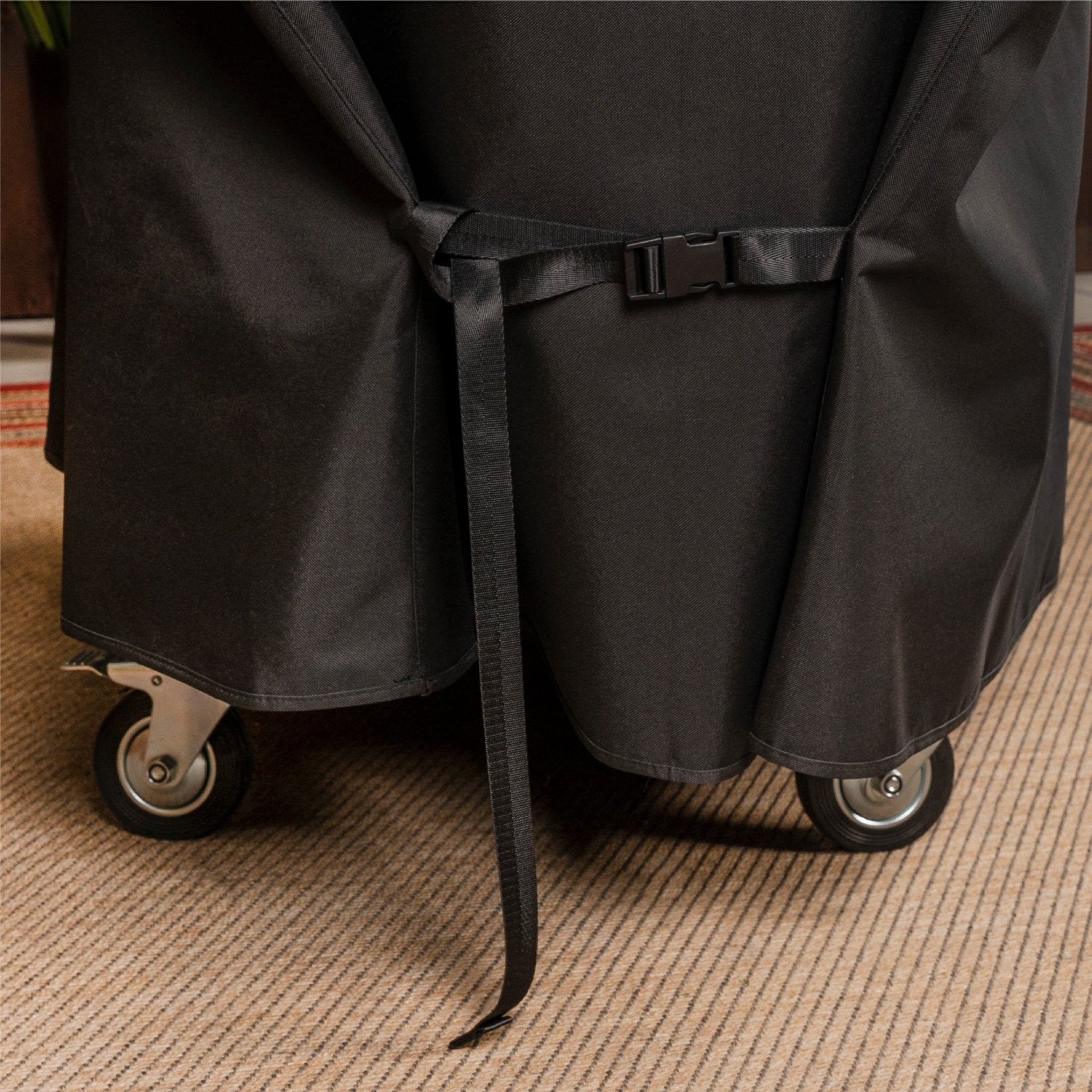
“Always cover your appliance when stored outdoors” is how Blackstone’s manuals put it. A heavy-duty cover keeps out rain, dust and the humidity that starts rust. Blackstone sells soft covers with buckle straps that hold them on in the wind, and hard covers that sit right on the griddle top. Its support page has a cover finder by model.
Whatever cover you use, don’t stack things on the griddle top. Blackstone says anything piled on it, especially pointy metal, can scratch the surface. For other gear worth having, see our Blackstone griddle accessories.
6. Pick the Spot: Garage or Outside
Blackstone’s rule is cool and dry. It wants a spot that doesn’t get damp, has some ventilation, and stays at a mild temperature, away from bathrooms and the kitchen.
A garage or shed works, with one condition from the manuals. Only store the griddle indoors if the propane cylinder is disconnected and removed from it. Blackstone also suggests checking on a garaged griddle now and then to wipe off dust. Our 8 tips for keeping a Blackstone working great cover the year-round storage basics too.
Staying outside all winter? That’s fine too, as long as it’s covered and you keep up the rust checks below.
7. Check for Rust Once a Month
Blackstone’s safety guide says to look at your griddle at least once a month, especially in winter. Lift the cover, look over the top, and wipe on a light coat of oil with paper towels. Blackstone says there’s no need to fire it up for that.
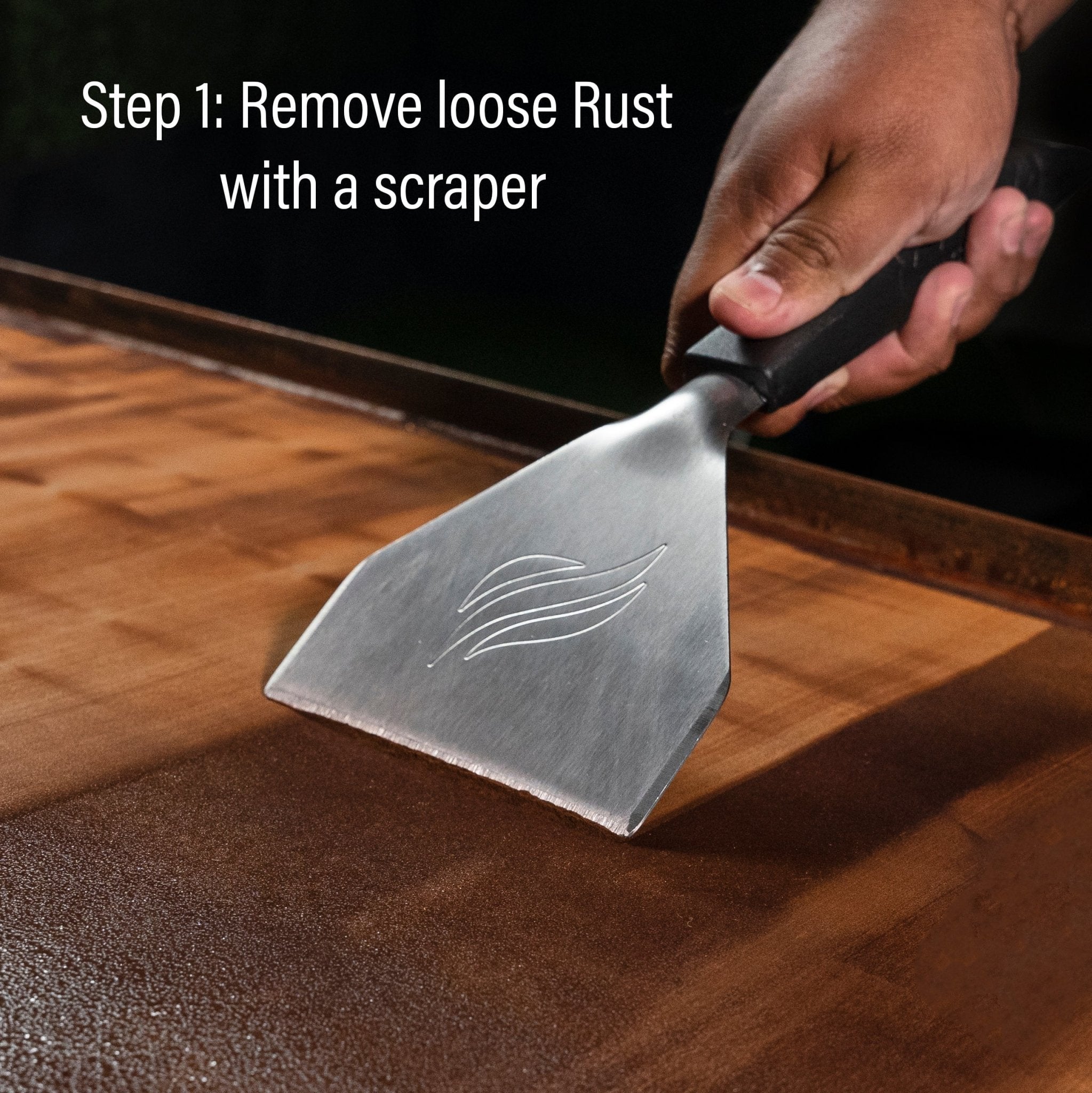
If you do spot rust, don’t panic. Blackstone points out that rust only forms on the surface. Its fix is to heat the griddle on high, scrape the rust off, scrub with oil and a grill stone, wipe it clean and season again. The manuals also allow steel wool or low-grit sandpaper before re-seasoning. Catching it early is far easier than taking on a whole rusty top in spring.
8. Spring Start-Up
When cooking weather comes back, give it a once-over before the first burger. Blackstone’s checklist, in order:
- Look underneath. If it sat for more than a couple of months, check under the top for nests and spider webs. Blackstone warns they can block the burners, and suggests blowing them out with compressed air.
- Check the gas parts. Look over the hose for cracks, the crimped end at the regulator, and the nut under the griddle where the hose meets the burners.
- Leak test. Brush soapy water on the connections and open the tank valve slowly. Growing bubbles mean a leak. Close it and replace the part before cooking.
- Fresh battery, full tank. Blackstone suggests a new ignition battery if the old one has been in a while, and a full tank before the first cookout.
- Clean and season the top. Scrape off anything that settled on it and wipe off light surface rust. Then season with oil, wipe it clean, and season again.
- Set it up safely. Keep it clear of the house wall, furniture and anything plastic, and make sure it sits level so grease doesn’t pool in a corner.

Sources
All read 2026-10-22: Blackstone’s own site and help pages, plus one propane supplier on tank storage.
- Blackstone, How to take care of your griddle: complete guide
- Blackstone, Griddle seasoning complete guide
- Blackstone, How often does a griddle need to be seasoned?
- Blackstone, How to remove rust from a griddle
- Blackstone, Griddle safety guide
- Blackstone, Griddling pre-season checklist
- Blackstone, Griddle 101
- Blackstone, Griddle care collection
- Blackstone, Griddle Seasoning & Cast Iron Conditioner
- Blackstone, Original 36″ Griddle Cover
- Blackstone, Griddle Top Restoration Kit
- Ferrellgas, How to safely store and transport a propane tank
- Blackstone, owner’s manuals for models 2142 and 1650 (Appliance Storage, Disconnect the LPG Cylinder, Storing LPG Cylinders, Preventing Rust), via the manuals page