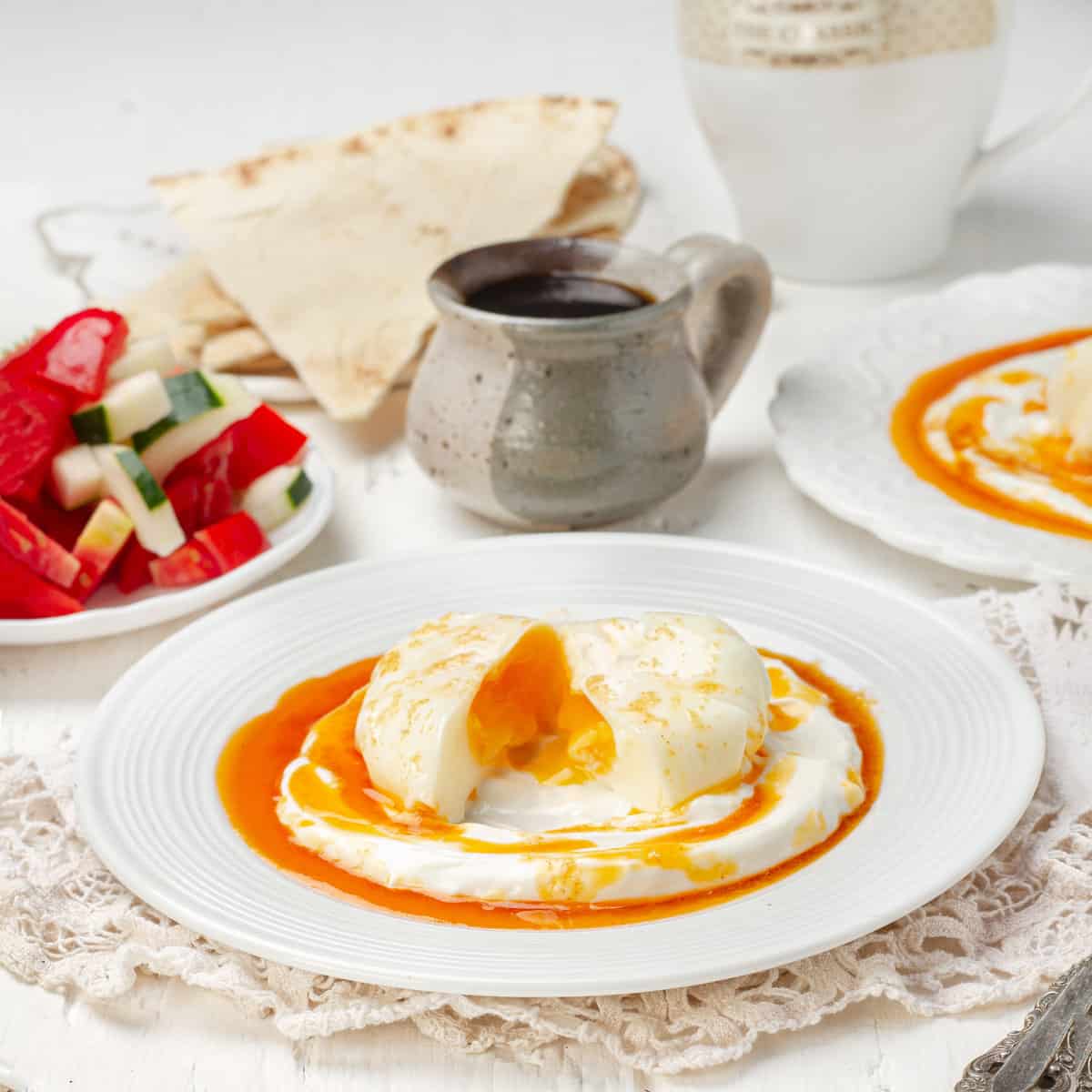
Turkish Eggs (Cilbir) are a traditional Turkish breakfast featuring soft and runny poached eggs nestled on a cloud of creamy yogurt flavored with bright lemon and aromatic garlic and drizzled with a decadent butter sauce infused with smoky paprika.
Each bite is an explosion of textures and flavors that transports you to the bustling streets of Istanbul.
This is not your average breakfast. Cilbir is a symphony of simplicity and surprise, where familiar ingredients come together in an unexpected harmony. It’s a dish that satisfies both your taste buds and your curiosity, inviting you to explore the vibrant culinary world of Turkey.
Why you should try Turkish Eggs
- It’s new: If you find yourself growing weary of mundane breakfast options like scrambled eggs or veggie omelet, Cilbir offers a refreshing departure. By marrying the unlikely duo of eggs and plain yogurt, this dish introduces a whole new realm of culinary possibilities. The resulting flavor profile is nothing short of irresistible.
- It’s healthy: Beyond its tantalizing taste, Cilbir boasts a plethora of health benefits. Thanks to the probiotics found in yogurt, this dish promotes healthy digestion and leaves you feeling satiated throughout the day. Plus, with its Weight Watchers-friendly points, you can indulge guilt-free while staying on track with your wellness goals.
- It’s cultural: Exploring the breakfast customs of other countries provides a window into their rich cultural tapestry. By embracing dishes like Cilbir, we not only expand our culinary horizons but also forge deeper connections with diverse traditions. And when a recipe aligns seamlessly with Weight Watchers principles, it’s a win-win situation for both your taste buds and your waistline.
Ingredients in Traditional Turkish Eggs:

- 4 eggs, at room temperature
For the Yogurt Cream:
- 1 cup (250g) plain Greek yogurt, fat-free
- 1 clove of garlic, finely minced (or garlic powder)
- Zest of 1 lemon
- Salt, to taste
For the Butter Sauce:
- 1 tablespoon light butter
- 1 teaspoon olive oil
- 1 teaspoon paprika (sweet or smoked), to taste
- Red pepper flakes (optional)
Preparation Time: 10 minutes
Cooking Time: 10 minutes
Servings: 2
Serving size: 120 g.
Just 1 WW Point Per Serving
Instructions:
1. Prepare the Yogurt Cream: In a mixing bowl, combine the Greek yogurt, minced garlic (or garlic powder), lemon zest, and a pinch of salt. Stir until well incorporated. Adjust the seasoning according to your taste preferences. Set aside.
2. Make the Butter Sauce: In a small saucepan, melt the light butter over medium heat. Once melted, add the olive oil and paprika. Stir well to combine. If desired, add a pinch of red pepper flakes for a hint of heat. Remove from heat and set aside.
3. Poach the Eggs Using the Glass Trick: Fill a large saucepan with water and bring it to a gentle boil over medium heat. Coat a heatproof glass dish with a thin layer of oil. Crack an egg into the greased glass dish. Carefully lower the dish into the pot of boiling water, ensuring that it remains submerged. Cover the pot and cook until the egg whites are set but the yolks remain gloriously runny, about 3-4 minutes.
4. Assemble the Turkish Eggs: Divide the prepared yogurt cream evenly between two serving plates, spreading it out into a smooth layer. Gently place two poached eggs on top of the yogurt cream on each plate.
5. Drizzle with Butter Sauce: Reheat the butter sauce, if necessary, then drizzle it generously over the poached eggs and yogurt cream.
6. Serve: Garnish with additional lemon zest, paprika, and a sprinkle of salt, if desired. Turkish Eggs are best enjoyed immediately.




Variations and Substitutions
While Cilbir itself remains relatively unchanged, you can elevate your dining experience by experimenting with complementary sides. For a more traditional Turkish twist, accompany your Turkish eggs with diced cucumbers and tomatoes, a scattering of olives, and a generous portion of crumbled feta cheese. This transforms your meal into a hearty and satisfying breakfast ensemble.

Tips and Tricks for Making Cilbir
When it comes to mastering the art of poaching eggs for Cilbir, simplicity reigns supreme. While traditional poaching techniques may pose a challenge for novice chefs, fear not! I’ve uncovered foolproof methods that yield consistently excellent results.
1. The glass trick: For a no-fuss approach, fill a pot with water and bring it to a gentle boil. Meanwhile, coat a heatproof glass cup with a thin layer of oil. Crack an egg inside the cup. Carefully lower the cup into the pot, ensuring it remains submerged up to the middle. Cover and cook for 3-4 minutes, or until the egg whites are set but the yolks remain gloriously runny.
2. The bag method: For an even more foolproof method, place an egg in a plastic bag that has been lightly greased with oil. Secure the bag tightly and immerse it in simmering water for three minutes. The result? A perfectly poached egg that would make even the most discerning chef proud.
Cilbir (Turkish Eggs)

Ingredients
- 4 eggs, at room temperature
For the Yogurt Cream:
- 1 cup 250g plain Greek yogurt, fat-free
- 1 clove of garlic, finely minced (or garlic powder)
- Zest of 1 lemon
- Salt, to taste
For the Butter Sauce:
- 1 tablespoon light butter
- 1 teaspoon olive oil
- 1 teaspoon paprika, sweet or smoked, to taste
- Red pepper flakes, optional
Instructions
- Prepare the Yogurt Cream: In a mixing bowl, combine the Greek yogurt, minced garlic (or garlic powder), lemon zest, and a pinch of salt. Stir until well incorporated. Adjust the seasoning according to your taste preferences. Set aside.
- Make the Butter Sauce: In a small saucepan, melt the light butter over medium heat. Once melted, add the olive oil and paprika. Stir well to combine. If desired, add a pinch of red pepper flakes for a hint of heat. Remove from heat and set aside.
- Poach the Eggs Using the Glass Trick: Fill a large saucepan with water and bring it to a gentle boil over medium heat. Coat a heatproof glass dish with a thin layer of oil. Crack an egg into the greased glass dish. Carefully lower the dish into the pot of boiling water, ensuring that it remains submerged. Cover the pot and cook until the egg whites are set but the yolks remain gloriously runny, about 3-4 minutes.
- Assemble the Turkish Eggs: Divide the prepared yogurt cream evenly between two serving plates, spreading it out into a smooth layer. Gently place two poached eggs on top of the yogurt cream on each plate.
- Drizzle with Butter Sauce: Reheat the butter sauce, if necessary, then drizzle it generously over the poached eggs and yogurt cream.
- Serve: Garnish with additional lemon zest, paprika, and a sprinkle of salt, if desired. Turkish Eggs are best enjoyed immediately.
Notes
Nutrition
Nutrition information is automatically calculated, so should only be used as an approximation.